
The Anti-Hustle Sanctuary: Why Slow Grow Wellness Is Rewriting the Rules in Women’s Fitness
Slow Grow’s all-women’s holistic fitness center was built on a counterintuitive idea that the bravest thing a woman can do for her health is slow down
There is a particular kind of exhaustion that comes not from overtraining, but from being told, for years, that the only way to be serious about your health is to be hard on yourself. To follow the plan exactly. To push through. To subtract anything you can: calories, rest days, softness, patience. Nina Marcelo Montenegro knows that kind of exhaustion personally. She lived inside it for years before she decided to build something different. The result is Slow Grow Wellness: Manila’s first all-women’s holistic fitness and wellness center, and one of the newest WFA CERTIFIED studios.
The name says everything you need to know about the philosophy and it is a deliberate provocation in an industry that has spent decades selling women on the idea that progress must be rapid, measurable, and visually dramatic to count. Slow Grow is built on the opposite premise. That sustainable change takes time. That wellness is not a destination you sprint toward, but a practice you show up for, imperfectly, at your own pace, as you live your life. And that the most important question is not how fast you can change your body, but why you want to, and whether that WHY will still make sense to you five years from now.
The Origin
She Built What She Needed
Every business origin story has a wound at the center of it, even if the founder does not always name it that way. Nina’s is no different. She has been on her own wellness and fitness journey for over a decade — long enough to have tried most of what the industry offers, and to have noticed what was missing from almost all of it. Commercial gyms felt intimidating, she says — particularly for women who were just starting out and needed a different kind of space than a floor full of equipment and full-body mirrors and unspoken performance pressure. The coaching she worked with was effective in certain ways, but it operated in a mode she has come to describe as restrictive: strict, fast-paced, hard, transactional. It worked for a while. But something was always being left out.
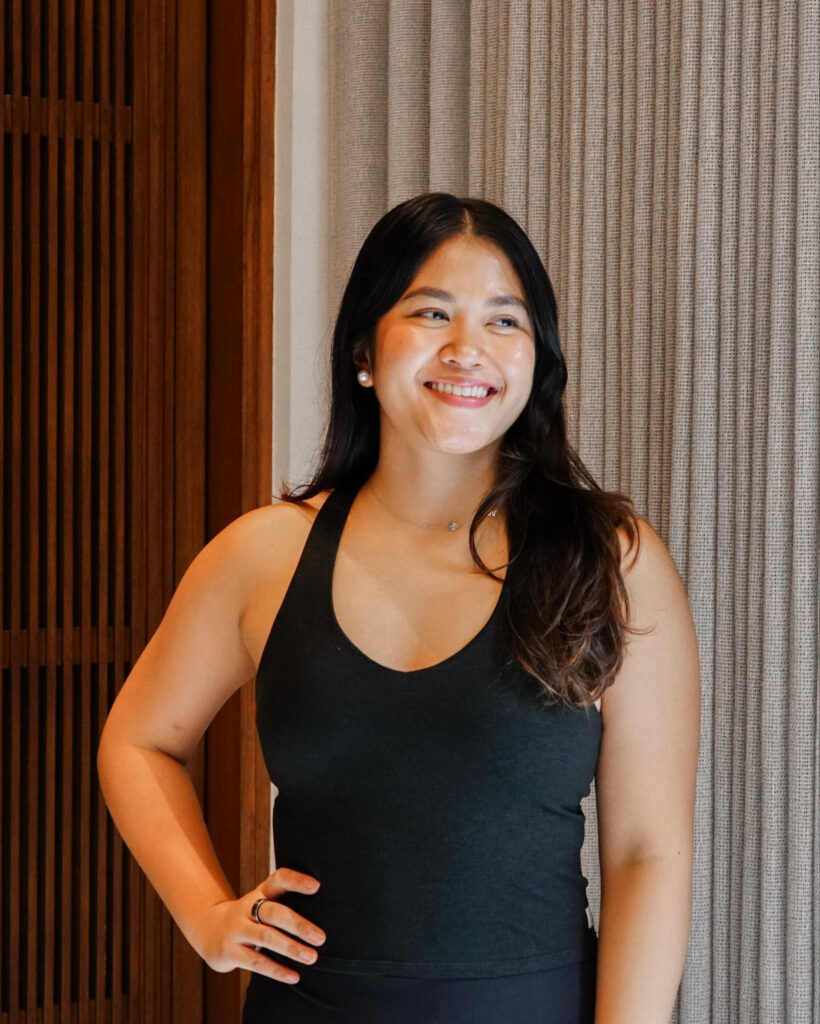
When Nina eventually found a health coach who focused not just on movement and nutrition but on the mindset underpinning all of it — the relationship a woman has with her body, the stories she tells herself about what she deserves and what she is capable of, the emotional architecture that makes some habits stick and others dissolve — the difference was significant. Not just in outcomes, but in how the whole process felt. Less like war. More like learning to listen.
“I really felt like being in the fitness space, it was a very male-dominated space — restrictive, very strict, hard, fast-paced. It worked for a while. But after, I realized there was something missing.”
— Nina Marcelo Montenegro, Founder
What she realized, sitting with that recognition, was that the kind of space she had been looking for. The one that took women’s holistic fitness seriously, that integrated mental health into physical training, that did not make a beginner feel like an inconvenience. It simply did not exist in Manila in any form she could find. The Metro has no shortage of gyms. It just has very few spaces that approach women’s fitness the way Nina had come to understand it needed to be approached: holistically, gently, without the undercurrent of judgment that makes so many women feel, even before they have done a single workout, that they are already behind.
So she built it herself. She began coaching clients one-on-one from her home gym in late 2022, and what she was doing quietly gained its own gravity. Women came, and then they came back, and then they told other women. By 2024, she was teaching group classes, the client roster had outgrown the space, and what had started as a private practice had become, unmistakably, a studio waiting to exist.
First Impressions
What Women Expected — and What They Found
There is a specific kind of hope that women carry when they walk into a new fitness space for the first time. Most of them have been disappointed before. They have walked into rooms that were technically open to them but not quite built for them; where the equipment was calibrated for a different body, where the instructor’s eye traveled past a beginner to someone more advanced, where the unspoken culture of the place made clear that they were welcome in theory, but not quite the point. They have learned, over time, to lower their expectations before they cross the threshold. What they find at Slow Grow tends to revise those expectations upward, fast.
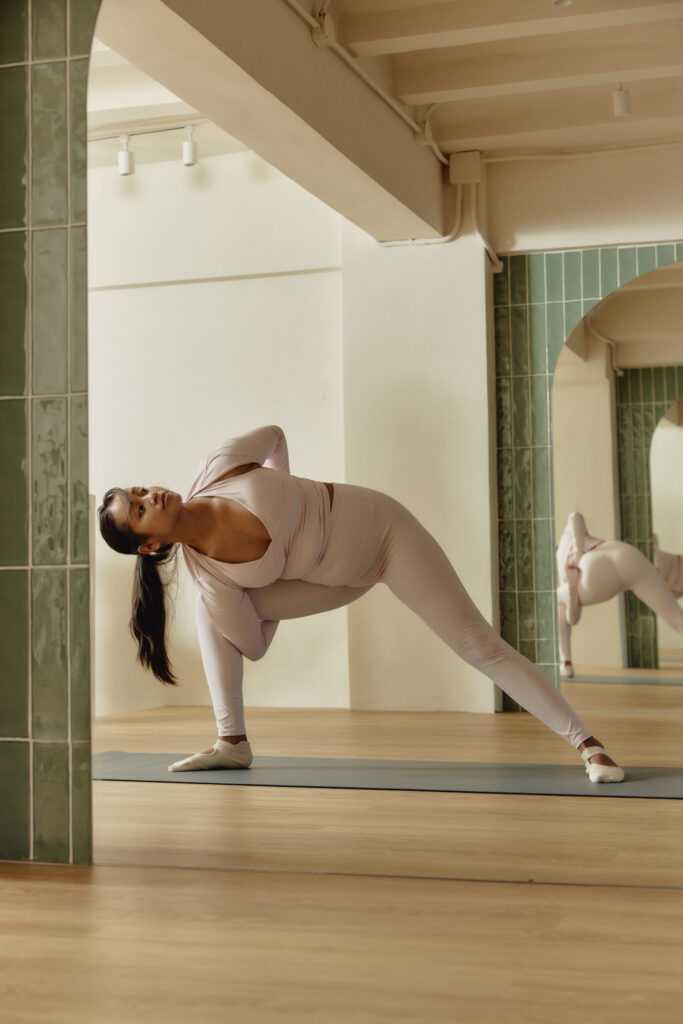
The women who come through Slow Grow’s doors for the first time describe a particular quality of the room that is difficult to manufacture and impossible to fake. One participant, who had been following Nina’s coaching work online since the pandemic, arrived already knowing Nina’s philosophy but not quite knowing what to expect of the studio itself. She had been familiar with Nina’s one-on-one coaching offerings but had not anticipated the breadth of what Slow Grow had become: the group classes, the functional training, the yoga, the full-range approach to what a wellness space could hold. The physicality of it surprised her. The same warm welcoming atmosphere, on the other hand, did not.
From the community:
“Since I’’d already met Nina before, and I know that it’s an all-women space, I already assumed it would feel like a safe environment and not intimidating, especially for those who are just starting off. And I was right with that feeling. As I entered the space, first, it felt really inviting, and the energy was good. And the girls here just seem open and free.”
— Participant, Slow Grow Wellness Pilates Session
That phrase — open and free — is worth sitting with, because it describes something specific about what an all-women’s space can produce when it is designed with intention. More than just the absence of male gaze or the statistical reduction in social comparison, it is something more generative: the particular ease that settles into a room when every person in it has been told, by the architecture of the experience, that she does not need to perform. That she can be uncertain. That she can be a beginner without apology. That she can show up exactly as she is and be received, not evaluated.

Another participant described a similar quality of surprise, not particularly at the safety of the space, which she had half-expected, but at how comprehensively Slow Grow seemed to have thought through what holistic actually means in practice. Commercial gyms, she noted, tend to offer one part of the picture: the physical. They might have a nutritionist on staff, or a class schedule that gestures toward mindfulness, but the integration is rarely real. At Slow Grow , she observed, the pieces actually connect. The functional gym work, the yoga or pilates sessions, the nutrition support through healthy drinks and supplements available in the studio, the one-on-one coaching that adjusts to a client’s life rather than asking a client’s life to adjust to a program.. it felt, she said, like they had covered all the bases.
From the community:
“Commercial gyms just offer like one part, but not actually the mental side, the nutrition side. Here, they want to know more about your long-term goal so that they can focus on that. And then they adjust based on your lifestyle.”
— Participant, Slow Grow Wellness
That last phrase is one Nina would recognize immediately. Adjusting to a client’s lifestyle, rather than asking the client to perform a lifestyle she does not actually have, is at the core of how Slow Grow approaches its programming. It is also, Nina would say, one of the most underrated things a wellness space can do. Most programs are designed for a hypothetical woman with unlimited time, a cooperative metabolism, and no particular emotional history with food or movement. Real women are different from that hypothetical. Slow Grow is designed for real women.
The Mission
Wellness, Without the War
Slow Grow Wellness positions itself as Manila’s first all-women’s holistic fitness center and the word holistic is doing real work in that description, not just marketing work. Every program, every group class, every piece of the studio’s philosophy is built around a three-part model that treats movement, nutrition, and mindset not as separate categories but as an integrated system. Nina has seen firsthand what happens when you optimize for one or two and leave the third out. You get results that only last six weeks. You get discipline that turns brittle. You get women who are technically fitter but no happier, no more at ease with themselves, no closer to the sustainable relationship with their health they were actually after when they started.
“I want women to feel welcome. I want them to feel empowered; to know that this is a safe space to explore what works for them and what doesn’t. And I also want women to feel connected, not only with each other in the community, but to themselves.”
— Nina Marcelo Montenegro, Founder
The studio’s approach to goal-setting reflects this same seriousness about depth. “Short-term goals are fine”, Nina says. “They give structure and momentum and something to celebrate. But the question Slow Grow coaches every client to sit with is a deeper one: what is your purpose, and what is your why? Not just ‘I want to lose ten pounds’ or ‘I want to be more consistent,’ but the thing underneath that, the actual life those goals are in service of. Once a woman can answer that question with honesty, the goals themselves become both more achievable and more sustainable, because they are anchored to something real. They are not arbitrary metrics she is chasing for their own sake. They are in service of a life she is actively choosing.”
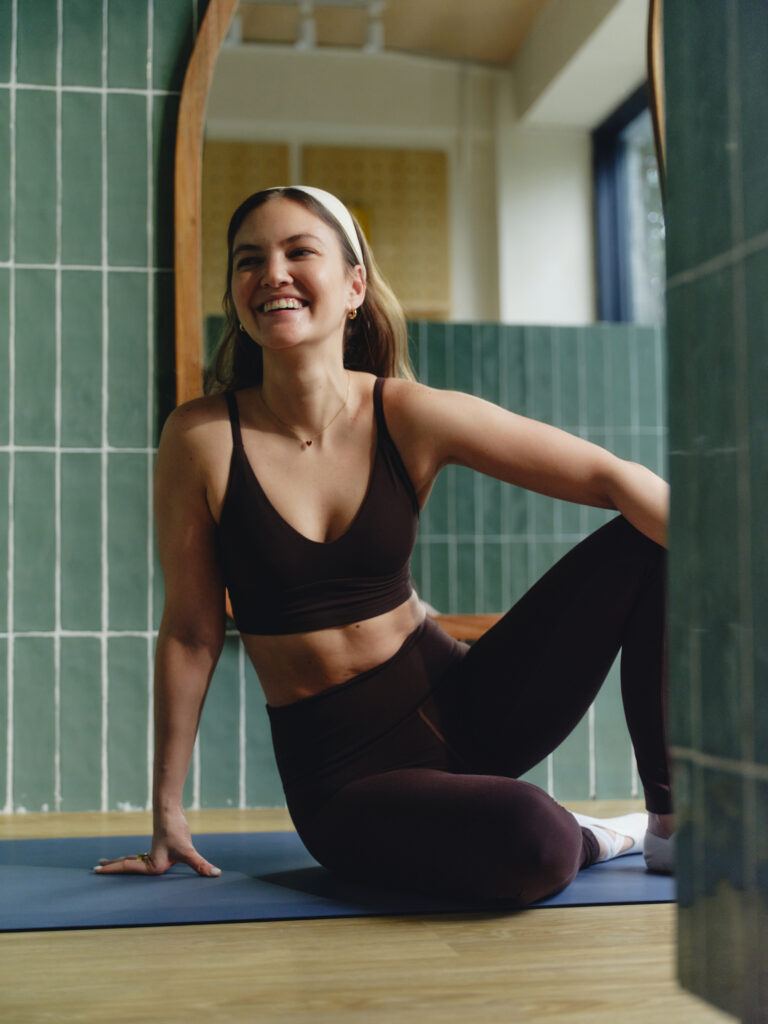
This distinction, between goals as endpoints and goals as expressions of a deeper intention, is something the women who train at Slow Grow describe noticing in practice, sometimes before they have the language to name it. The experience of being asked not just what you want to look like but what you want your life to feel like, and then having a program designed around that answer, is genuinely different from what most fitness spaces offer. It is also, for many women who arrive carrying years of complicated history with their bodies, unexpectedly emotional.
At Slow Grow, every client relationship begins not with measurements or fitness assessments but with a question: what is your purpose and your why? It is a small pivot in framing, from body-as-problem to body-as-instrument, and its effects on motivation, consistency, and long-term wellbeing are, by the accounts of the women who train here, significant and lasting. Programs are then adjusted to fit each woman’s actual life, not a hypothetical version of it.
The Personal Reckoning
She Had to Unlearn It Too
It would be easy to tell Nina’s story as a straightforward arc: woman struggles, woman heals, woman builds the thing that healed her. But the truth is messier and more honest than that, and Nina does not sanitize it. Ask her about her own relationship with her body before Slow Grow existed, before the coaches and the mindset work and the slow, deliberate reorientation toward self-compassion, and she answers without hesitation: it was negative. It is still, she adds, something she is actively unlearning.
She grew up, she says, always on the bigger side. The beauty standards that surround women in the Philippines (and everywhere) made their mark, as they do on almost every woman who grows up absorbing them. When she first entered the fitness world seriously, the goal was physique. Weight loss. Control. The motivation was not love of her body but dissatisfaction with it, and that dissatisfaction was the engine she was supposed to run on. It worked, after a fashion, the way deprivation usually does.. until it did not.
“It did not come from a place of love. I didn’t have the best relationship with my body at the beginning. But over time, going on this journey of realizing that wellness is more than what you look like. It’s your mental state, whether you enjoy the activity, the people you do it with. It’s improved a lot.”
— Nina Marcelo Montenegro, Founder
What she is describing is not unique to her. It is the experience of an enormous number of women who enter fitness spaces looking for health and end up, often without quite noticing when the shift happened, in a complicated and sometimes damaging relationship with food, exercise, and their own reflection. The fitness industry, with its transformation photos, its before-and-afters, its constant implicit message that the current version of you is the problem to be solved, is not neutral territory. It can heal. It can also harm. The difference, Nina has come to believe, lies almost entirely in the question of why you are doing it and what the space around you is asking of you.

“There are still hard days”, she says. “Days when the old voice shows up with its old measurements. But the practice of building Slow Grow, of creating something whose entire premise is that women deserve to be met where they are, that the body they have today is not a failure but a starting point, has, it seems, been its own form of continued healing. You cannot spend every day building a space of radical self-acceptance for other women without eventually extending some of that acceptance to yourself.”
Building The Studio
The Hardest Part of Slow Grow was Not Slowing Down
There is a particular irony in building a studio dedicated to rest and anti-hustle culture on the back of a period of all-consuming, health-neglecting hustle — and Nina is clear-eyed about it. The first stages of building Slow Grow required her to work every day without breaks. As the sole owner of the studio, managing everything from programming to finances to the thousand invisible tasks that keep a small business alive, she completely gave in to the pressure the way most founders do. She stopped working out as much. She forgot to eat meals. She pulled back from friends and family. She was, in the language of the very philosophy, trying to build a business around not taking care of herself. The recognition of that contradiction did not immediately resolve it. Awareness and behavior change are not the same thing, and Nina is honest about that. But it gave her something to keep returning to. A compass, even in the seasons when she was not facing the right direction.
“I started neglecting my own health. I wasn’t working out as much. I would forget to eat meals. The pressure of just having to show up and giving into that at the beginning.. that was a big challenge.”
— Nina Marcelo Montenegro
Then there was the self-doubt. Not just in the ordinary uncertainty of any new venture, but the specific doubt that comes from building something the market has not quite seen before. The concept of holistic wellness as a women’s fitness offering, in the Philippines, in the form Nina envisioned, was genuinely new. That newness invited questions, mostly from men, who did not understand why the offering needed to be women-only, who made the business case for broadening the clientele. She went back and forth on it, she admits. But whenever she traced that reasoning to its conclusion, she arrived at the same place: the point of Slow Grow, she says, was never to be the most profitable gym in the city. The point was to create something meaningful and impactful for the specific women who needed it. And the specificity, the particular safety and permission that comes from a space designed for women, by a woman, with women’s actual experiences at the center — is not incidental to the offering. It is the offering.
She is more certain of that now than she was in the early days. The community that has formed around Slow Grow, the women who come in carrying years of complicated history with their bodies and leave, session by session, building something gentler is its own answer to every question that was ever raised about whether the model would work.
Inside The Studio
A Safe Space to Explore Everything
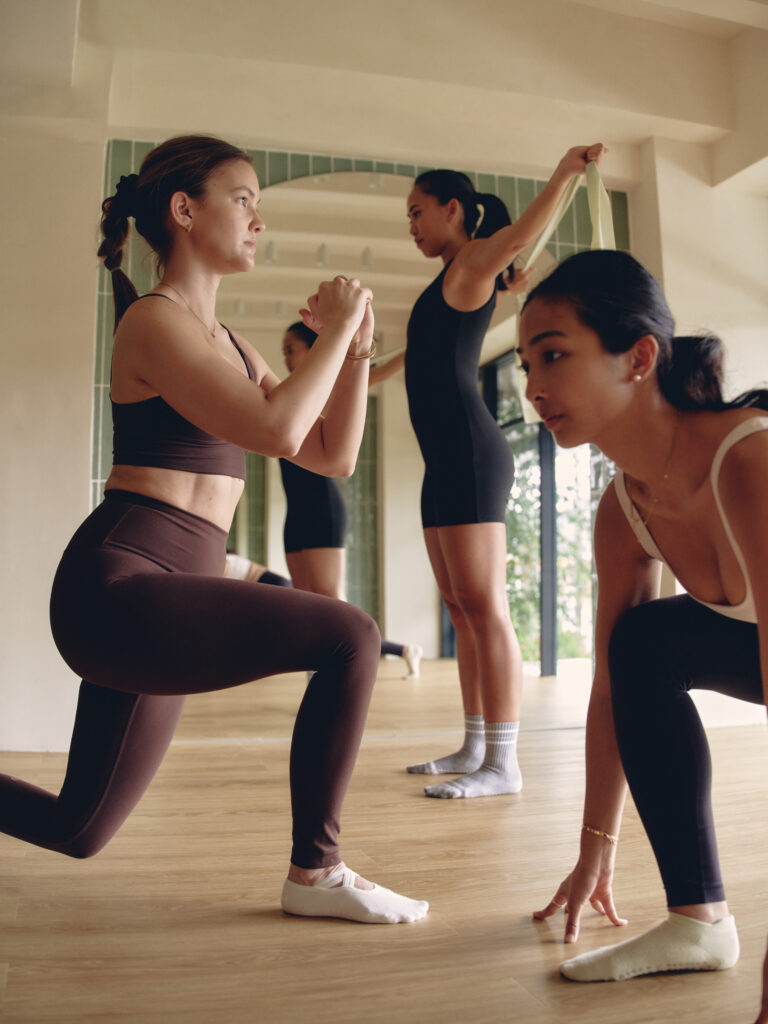
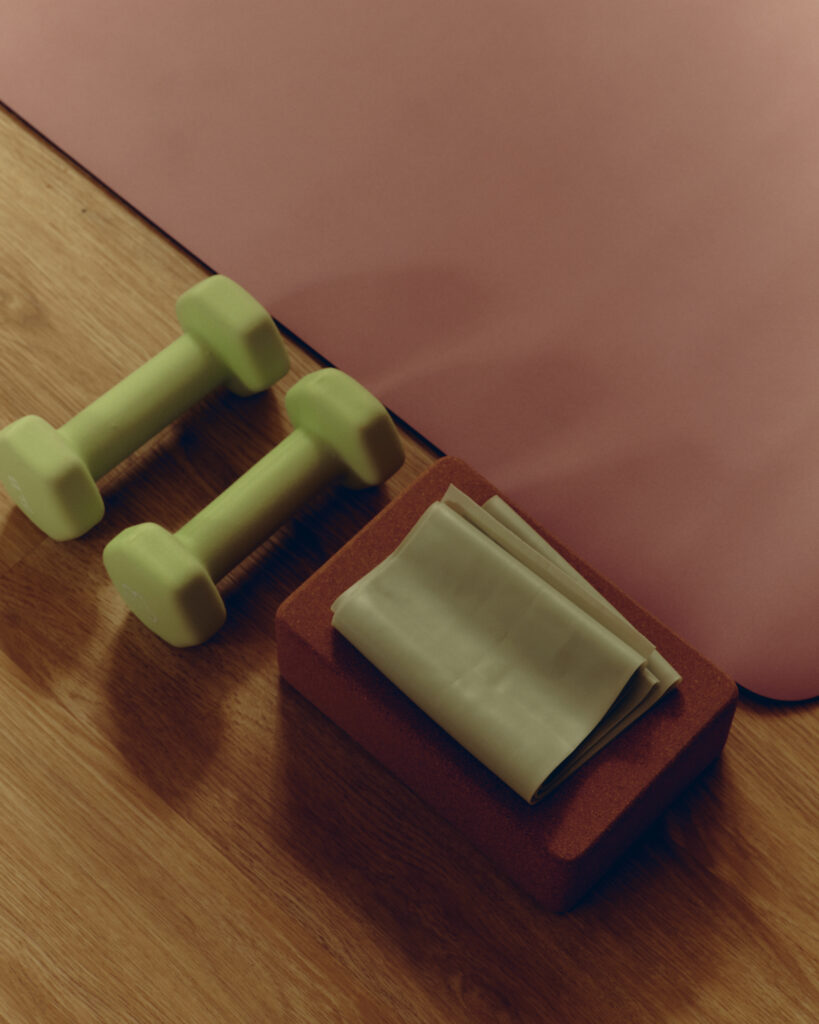
Slow Grow Wellness is not a gym in the conventional sense, and Nina is careful not to describe it as one. It is a studio; a word that implies something more intentional about the relationship being created between a space and the women who inhabit it. What that means in practice is a setting that holds more than most fitness spaces dare to hold. There is functional gym training for women who want to build strength and capacity in their bodies. There is yoga and pilates for women who need movement that is also meditation, physical practice that is also spiritual practice. There are body classes and other functional movement formats that expand what women understand to be possible in a workout. And woven through all of it is the nutritional dimension: healthy drinks and thoughtful supplementation available in the studio, not as an afterthought but as part of the same integrated philosophy that governs everything else Slow Grow does.
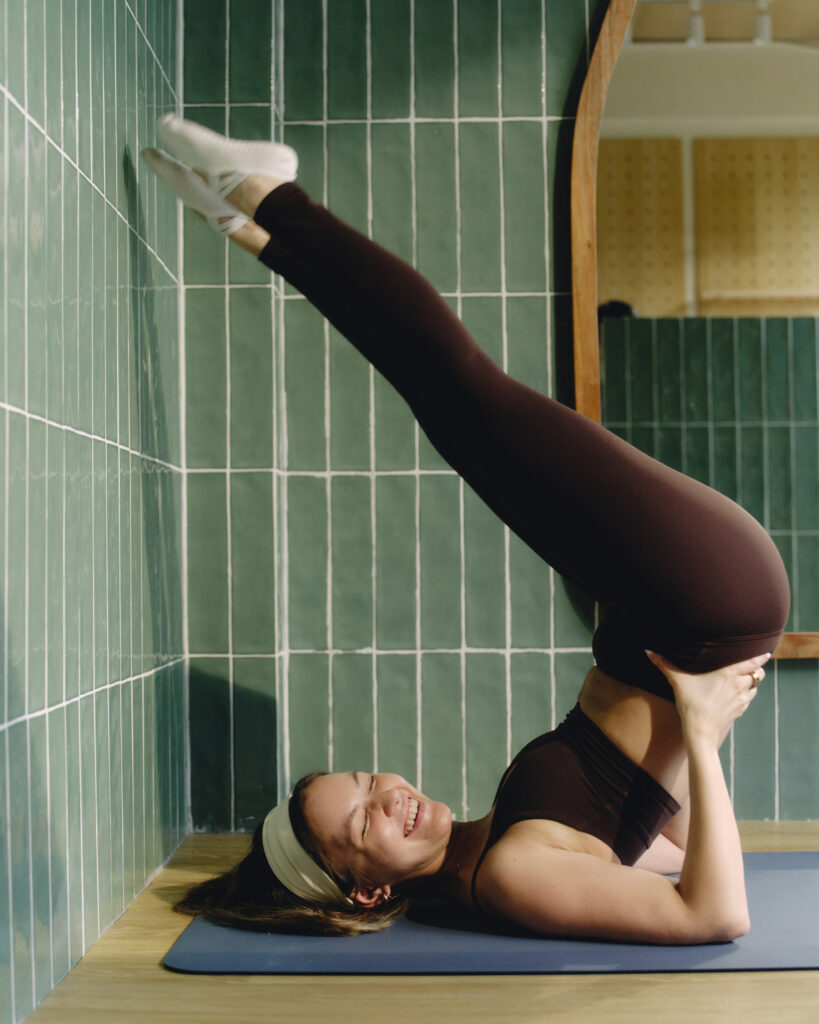
Participants who stepped inside the studio for the first time describe being surprised by the comprehensiveness of it; the sense that someone has thought carefully about every part of what a woman might need when she decides to take her health seriously, and then actually provided it in one place. The functional training is there. The quiet is also there. The community is there. The matcha is there. Especially the matcha.
From the community:
“It seems holistic. There’s the functional gym, but they also offer yoga, and that’s more on the mental and the spiritual. They also offer Pilates and other functional movements. And on top of that they have their healthy drinks. It seems like they covered all bases when it comes to wellness.”
— Participant, Slow Grow Wellness
That last detail — the drinks, the matcha — might seem small against the backdrop of everything else, but it is worth paying attention to as an expression of philosophy. A studio that has thought about the quality of the tea it serves is a studio that has thought about hospitality in the full sense of the word. It’s about what it means to receive someone. It’s about the full arc of a woman’s experience from the moment she walks in to the moment she leaves, and what it should feel like at every point along that arc. The fact that at least one participant described the smoothie selection as the thing she would definitely come back for is not a distraction from the mission. It is evidence that the mission is working and that Slowgrow has created a place women actually want to return to, not just a program they feel they should complete.
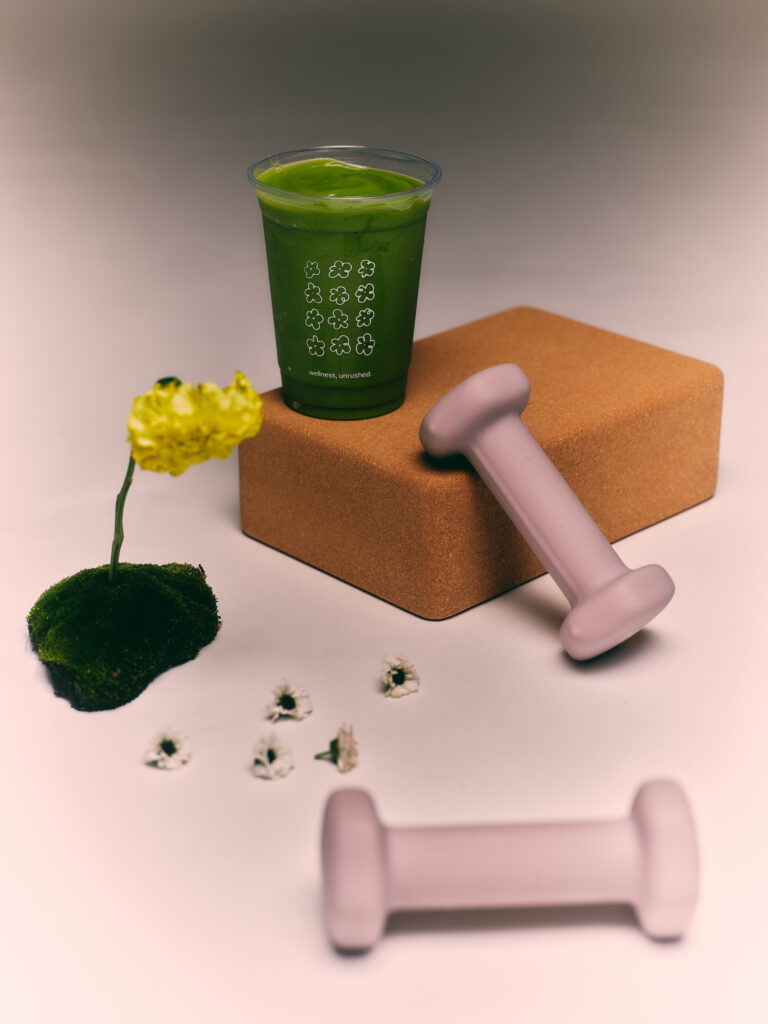
From the community:
“It’s actually my first time drinking matcha, so I tried their matcha. I love the drink. I love their smoothies. I feel like I’d definitely go back just to drink.”
— Participant, Slow Grow Wellness
Underneath the lightness of that observation is something Slow Grow has worked hard to create: a space that is easy to return to not because it is effortless, (it asks real things of the women who come), but because every part of the experience has been designed to make a woman feel that the effort was worth it. That she was worth it. That showing up for herself, in this particular room, on this particular afternoon, mattered.
“The programs that we have, the group classes we have, it’s all about really discovering the best version of you. That is the feeling I want women to have when they enter the studio and when they try everything that we have here.”
— Nina Marcelo Montenegro, Founder
What Comes Next
Taking the Slow Girl Experience Everywhere
Nina is not done building. The studio is established, the community is growing, and Slow Grow’s model has proven that there is a real appetite in Manila for exactly this kind of space. Now she is thinking about REACH. The mission is to reach more women who would benefit from what Slow Grow offers but cannot get to the studio. The new mothers whose schedules make leaving the house a genuine logistical challenge, the women in other cities, other countries, who have never had access to anything like this and maybe the women who need the Slow Grow philosophy at six in the morning before the rest of the house wakes up.

Online classes are coming! Live virtual sessions will be designed to bring the slow girl experience to women wherever they happen to be. Brand collaborations are in the works with partners whose values align with the studio’s ethos. And there is, beyond all of it, the dream that Nina holds with the particular kind of confidence that comes not from certainty but from having already built something that people said could not quite exist: she wants to take Slow Grow international. One step at a time. Which, given everything the studio stands for, sounds exactly right.
For now, Slow Grow Wellness stands as something the Philippine fitness industry needed and did not know how to ask for: proof that the softer approach works. That sustainability is a feature, not a concession. That being seen and welcomed and met where you are is not a luxury add-on to a fitness program, it is the program. That slowing down is not giving up. It is, for many women, the first honest thing they have done for their health in years.
“At the end of the day, what is it really about? Is it about making money, or is it about creating something meaningful and impactful for the women who need it?”
— Nina Marcelo Montenegro
Nina Marcelo Montenegro built Slow Grow from a decade of lived experience, a freelance coaching practice run out of her home gym, and a conviction that the fitness industry was getting something fundamentally wrong about women. The studio exists now. The women are finding it. And the thing that Nina wanted them to feel when they walked through the door — welcomed, empowered, connected, seen — is, by every account that matters, exactly what they find.
The bravest thing, it turns out, is not always the hardest thing. Sometimes it is just slowing down enough to start.
Nina Marcelo Montenegro is the Founder & Owner, Slow Grow Wellness. A health coach, group fitness instructor, and the woman behind Manila’s first all-women’s holistic wellness studio. Nina has been on her own wellness journey for over ten years and built Slow Grow out of everything she wished had existed along the way.
This article is written by Anne Coleman-Precilla